
Stowmarket Food Museum – October 2025
In early October 46 of us had a lovely day at Stowmarket Food Museum. Set in 84 acres and with 17 historic buildings it kept us busy all day. Their current exhibition is School dinners; it was very interesting to see how they have changed over the decades. Lots of agricultural items on display showing from the field to our plate.
Nestled in the heart of Stowmarket, the Food Museum stands as the only museum in the UK dedicated to exploring the rich history of food production, farming, and the people behind the industry. With over 40,000 objects, including fascinating exhibits, this museum is a culinary journey through time that offers something for everyone.
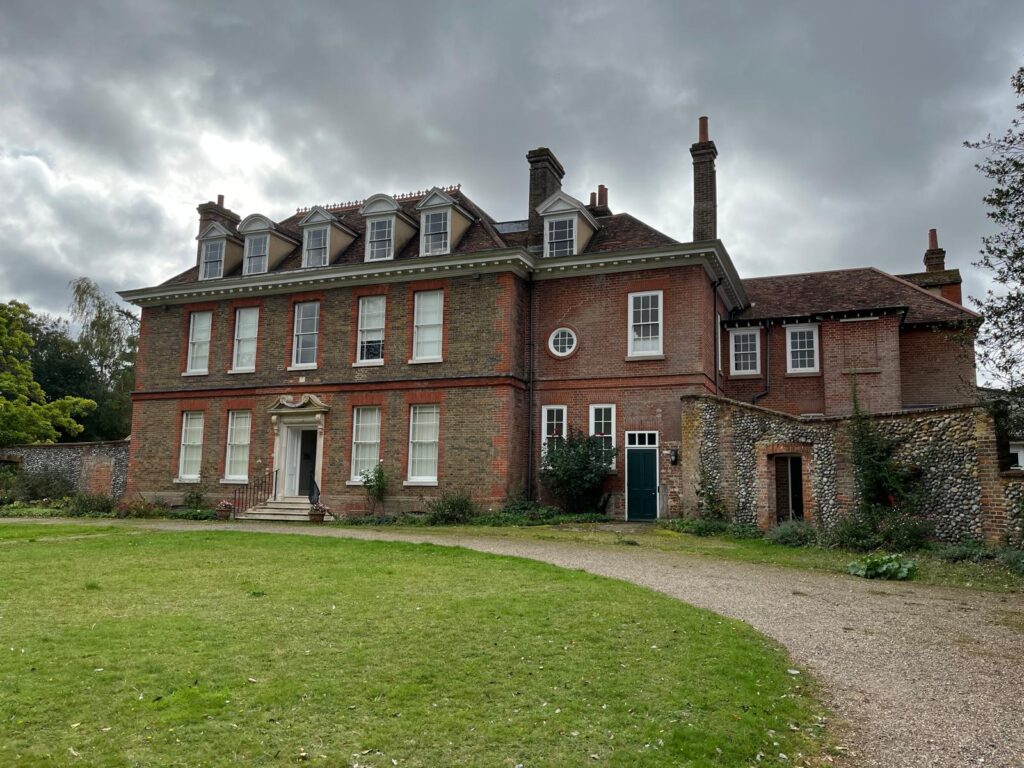
Abbotts Hall
Abbotts Hall is a Queen Anne house located within the 84-acre grounds of the Food Museum. The hall’s history is closely tied to the museum, which explores the heritage of farming and food production in East Anglia.
The site of Abbot’s Hall has a long history, with an estate or manor recorded here as early as the 12th century.
The hall was the centre of a large food-growing estate that produced grain, hops, livestock, and produce for the owners, workers, and for sale.
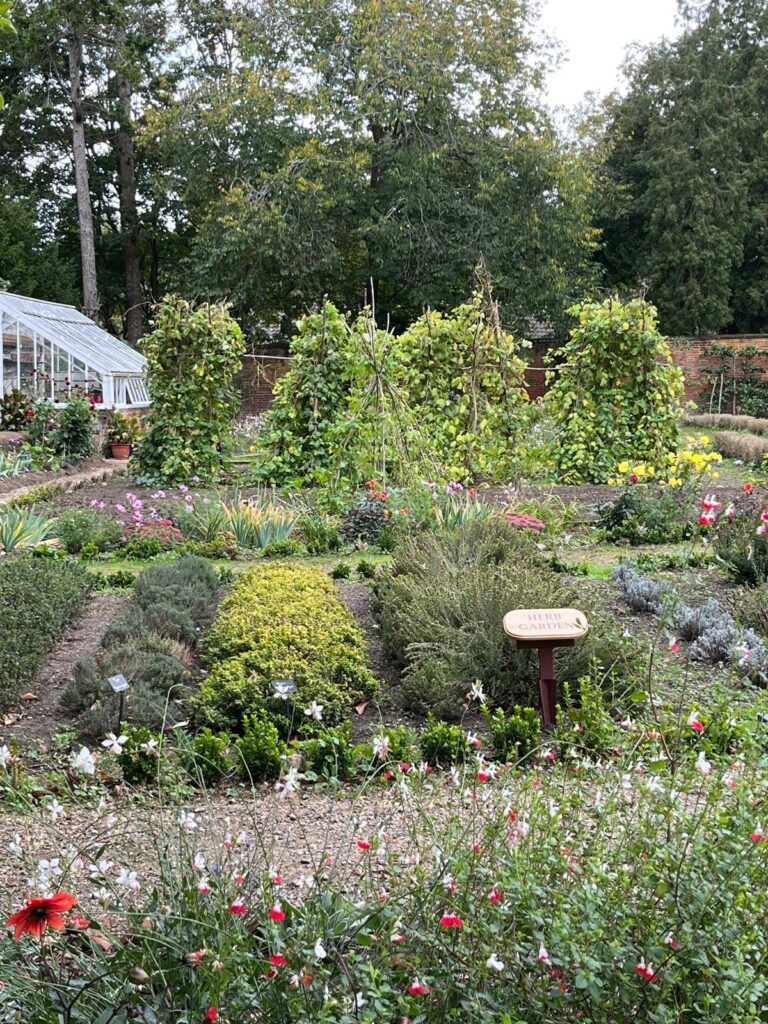
Walled Garden
Located next to the historic Abbot’s Hall. The garden grows a variety of seasonal vegetables, salads, and herbs that are used by the museum’s café.
The garden is open for visitors to enjoy, and some of its produce is occasionally sold at a cart on-site.
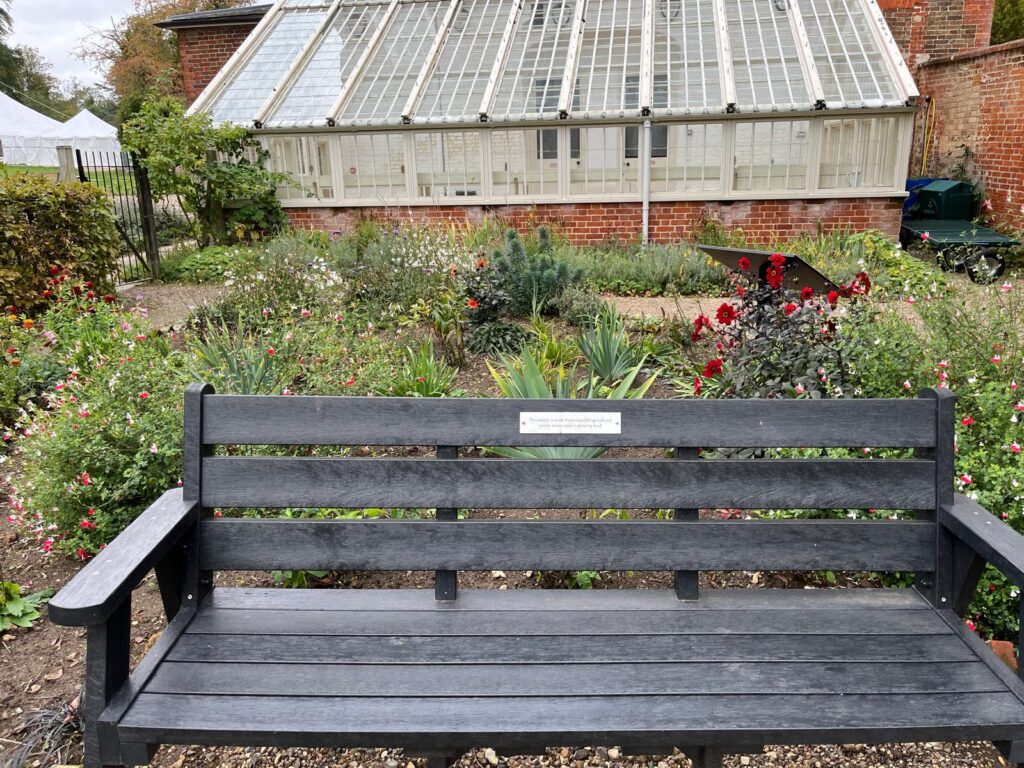
Garden Bench
The Food Museum engages in projects that promote sustainable practices, including garden benches made from recycled materials.
In the background is the Victorian Conservatory, which overlooks the walled garden.
Copped Hall – August 2025
This was an afternoon visit for the Friends.
Copped Hall in Epping, is a fine Georgian mansion under restoration, with 20 acres of landscaped parkland and four acres of walled garden.
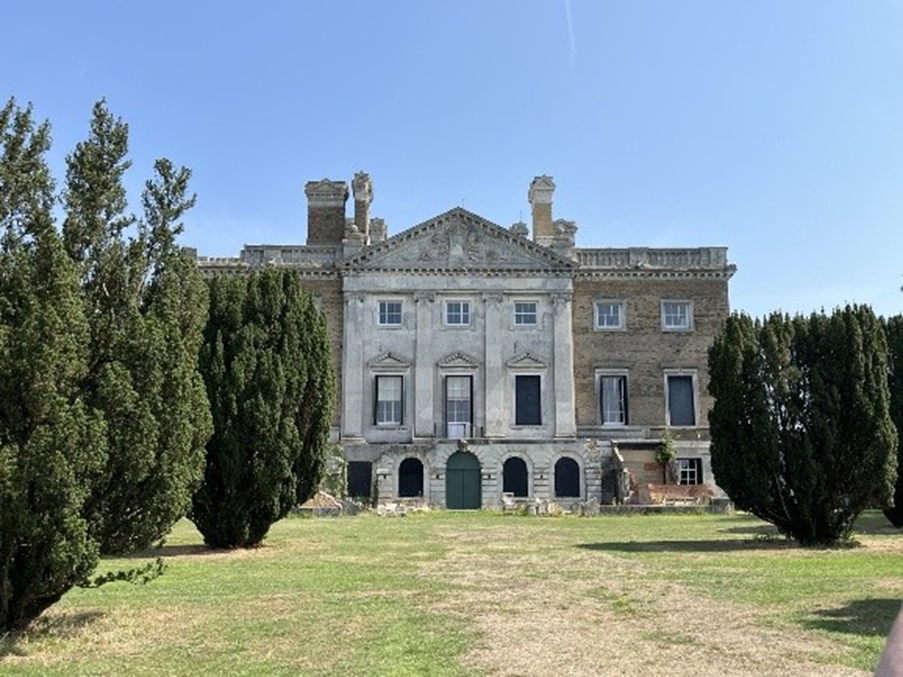
The mansion and gardens are situated on a site of ancient human habitation. Many important buildings, from the Medieval, Tudor and Elizabethan eras were demolished prior to the present mansion being built and enlarged by the Victorians.
A large fire in 1917 destroyed much of the roof and interior so the family moved to a different house on the estate. The house was never rebuilt and after the family left, the property suffered decades of neglect, though the exterior walls remained almost intact. Following the fire, the house was left to decay. After the last owner died in 1949 the estate was sold. The construction of the M25 motorway through the estate in the 1980s brought the house closer to urban areas and a constant target for developers
From 1986-1995 a campaign was successfully fought by a committee comprised of representatives of local conservation societies against repeated large scale aggressive development proposals for the mansion and parkland. Three of these individuals set up the Copped Hall Trust which finally saved the mansion and gardens by purchasing them in 1995. The aim of the Trust is to permanently protect the site, carefully restore Copped Hall and its gardens for educational, cultural and community benefit.
We were met by some of the volunteers who gave us a comprehensive tour of the house. It was fascinating to see rooms without ceilings and bare unplastered walls and realise how much work has been done and the tremendous target and challenges the Trust faces in continuing with the restoration.
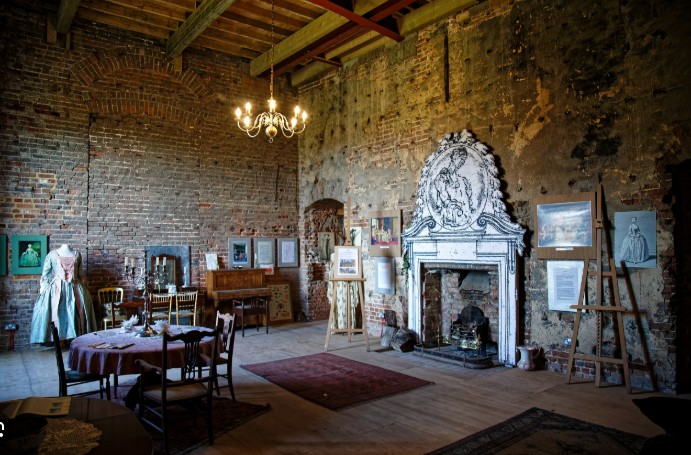
Photographs of the before and after showed the extensive work which has been done re-building the walls and re-establishing the roof. The Portland stone staircase has been rebuilt up to the first floor and a new landing recreated. The State Hall on the first floor has been restored to 1758 condition, giving us a taste of what is to come in the rest of the house.
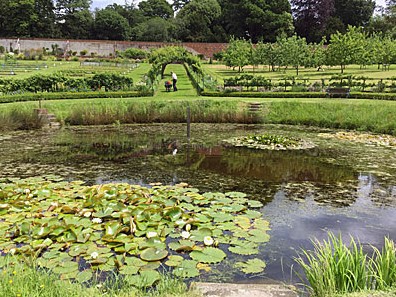
We were served delicious home-made cakes and tea and given guided tours of the extensive gardens. There were so many areas to admire including a lily pond, a rockery dotted with quotations from Shakespeare as well as the trees and flora. We were also shown excavations that had revealed a house that Mary Tudor had once lived in before becoming Queen and our guide had some very interesting anecdotes about this.
The Trust hold special events and open days when members of the public can visit so keep an eye open for dates.
Copped Hall was a fascinating history lesson as well as a delightful time exploring the house and extensive grounds.
The weather was kind to us and a very enjoyable afternoon was had by all who attended.
Scotney Castle – June 2025
On what started as an overcast but dry morning, 40+ of us set off on a visit to Scotney Castle, which is approximately 9 miles southeast of Royal Tunbridge Wells in Kent. The coach driver did a fantastic job of negotiating the very long and narrow driveway up to the carpark.
On arrival we were all handed an entrance sticker, pamphlet and clear instructions on what was available to see during our five hours stay.
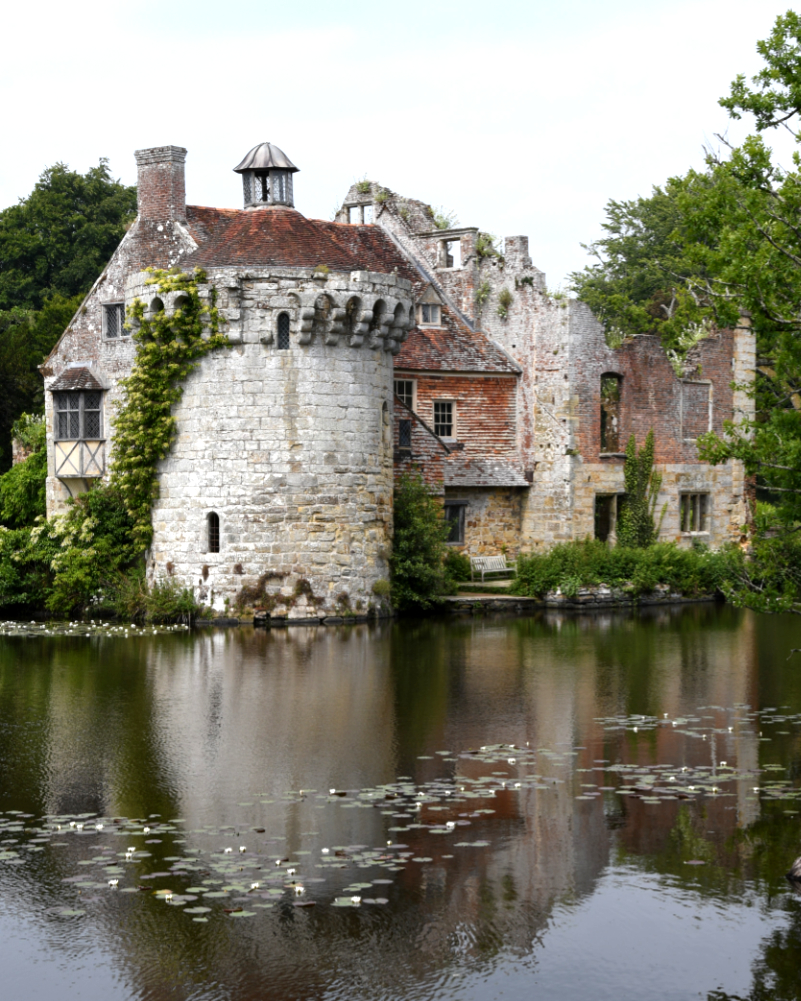
Scotney Castle
Scotney Castle is a scheduled ancient monument and has a long and rich history. The earliest parts of the old castle were built in 1378 by Roger de Ashburnham and were altered over the years by both the Darell and Hussey families.
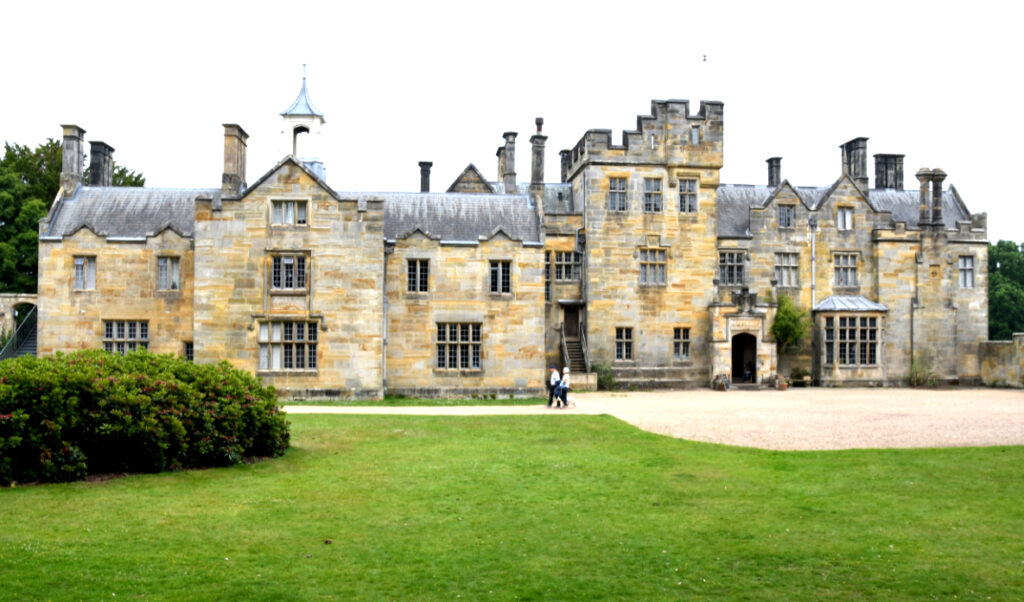
House
Built between 1837 and 1843, the house contains a large collection added by three generations of the Hussey family. The collection includes many artworks, books and furniture. Scotney Castle has been in the ownership of the National Trust since Christopher Hussey’s death in 1970. The house remained the private residence of his widow Betty Hussy, until 2006 and first opened to visitors in 2007
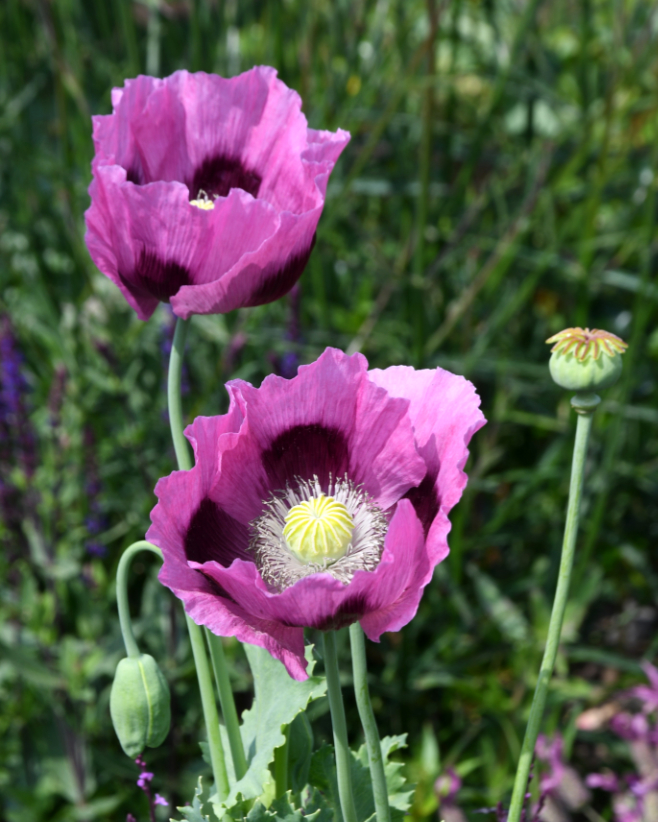
Walled Garden
The one-acre walled garden was built in around 1840 to provide the family with fresh produce, including fruit, vegetables, herbs and an assortment of flowers.
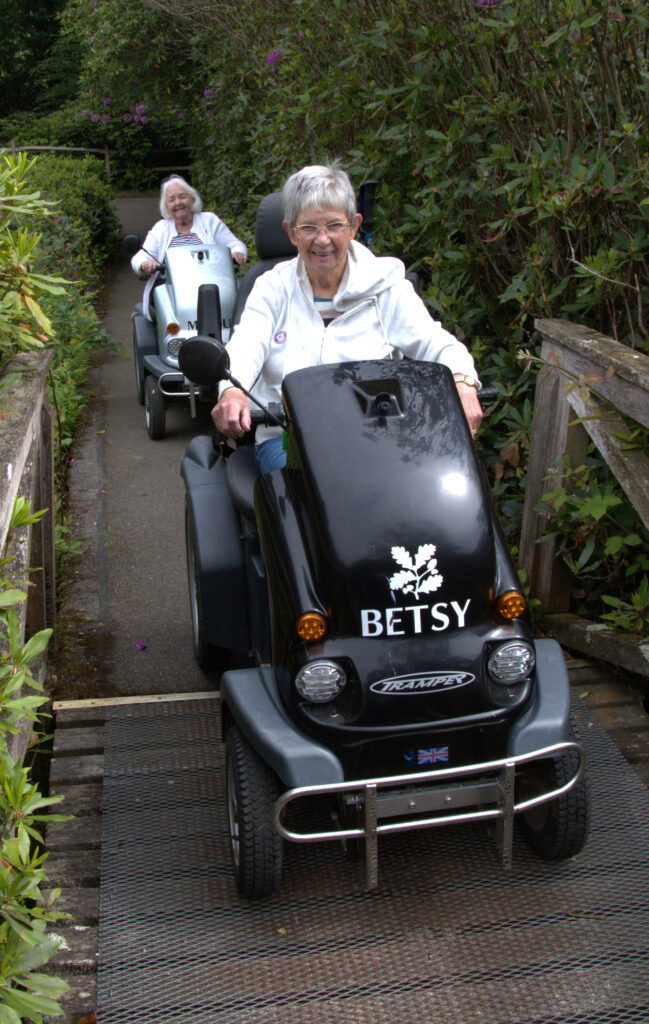
Accessibility
Two of our party made good use of the on-loan mobility scooters, giving them accessibility to large parts of the 780 acre estate.
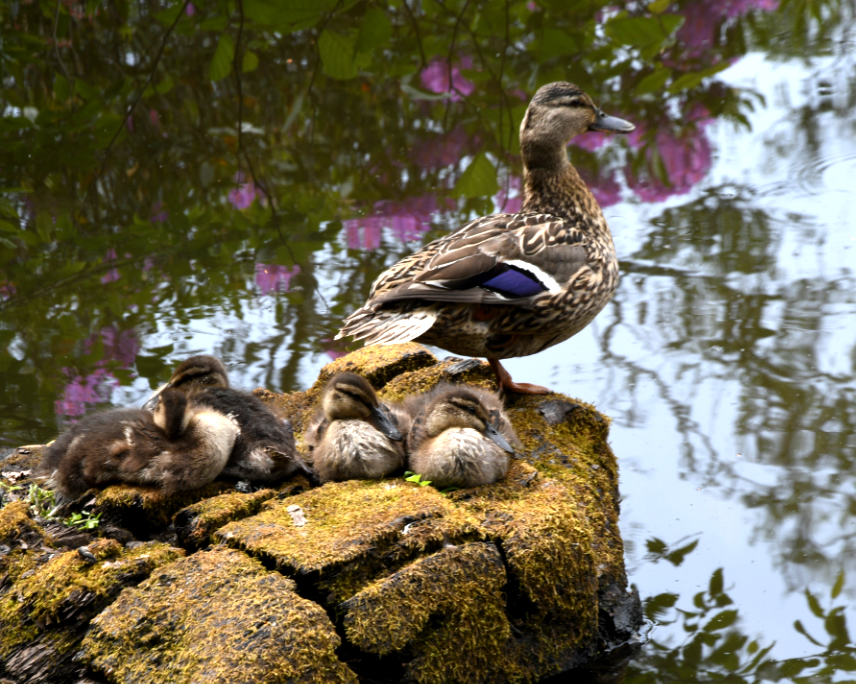
Wildlife
Nature at its best. Mother duck keeping her brood of ducklings safe, perched on a rock in the castle moat.
There was very good value for money catering facilities on site, although we did overwhelm them slightly when we first arrived, with the majority of us requiring refreshment after the journey. But we are a patient lot on the whole!
Scotney Castle is well worth visiting. We were blessed with improving weather throughout our stay, ending up sunny and warm, with some of use enjoying an ice cream as a final treat.
Two London Museums – March 2025
Towards the end of March, 40 of us went to The Museum of the Home in London.
The weather was kind which was a bonus as they had a lovely garden to wander in.
Inside the museum were room settings, back to 17th century, and looking forward to 2049. It was a lovely museum housed in Georgian almshouses.
We then went on to Docklands where some of us took time to explore the Dock area and some went to the Museum of London. Here we stepped back in time to see 400 years of Docklands history. Another lovely day out.
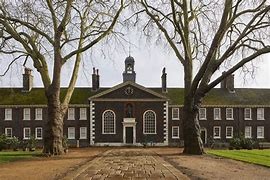
Museum of the Home 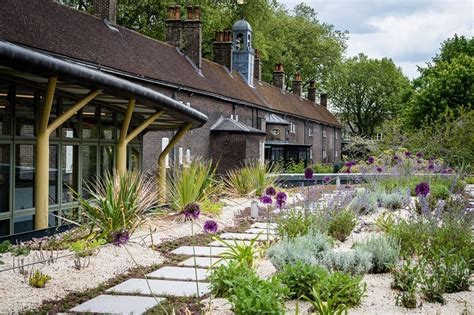
Museum Garden 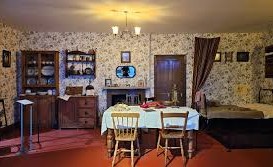
Room in the Museum
Rochester – November 2024
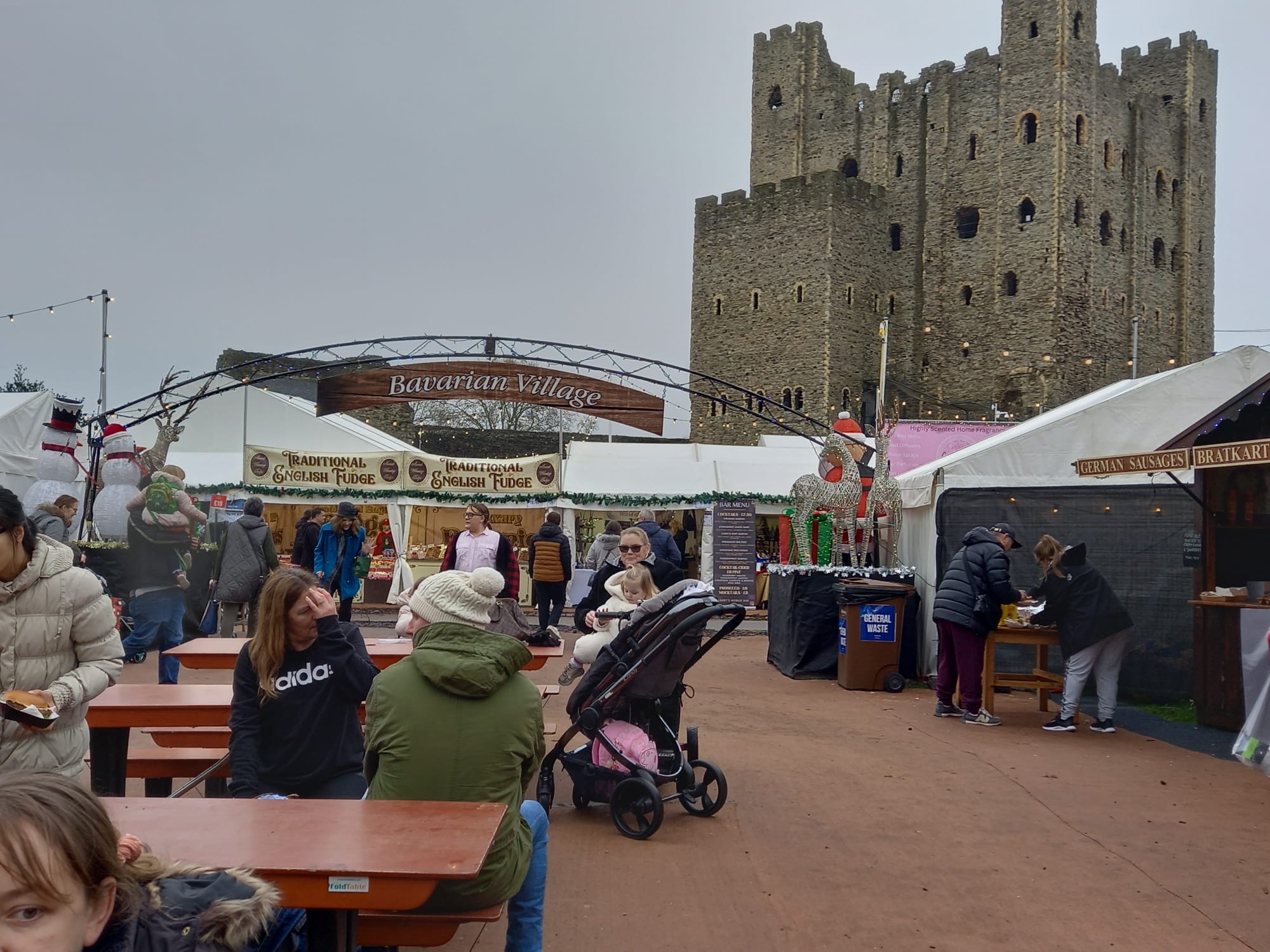
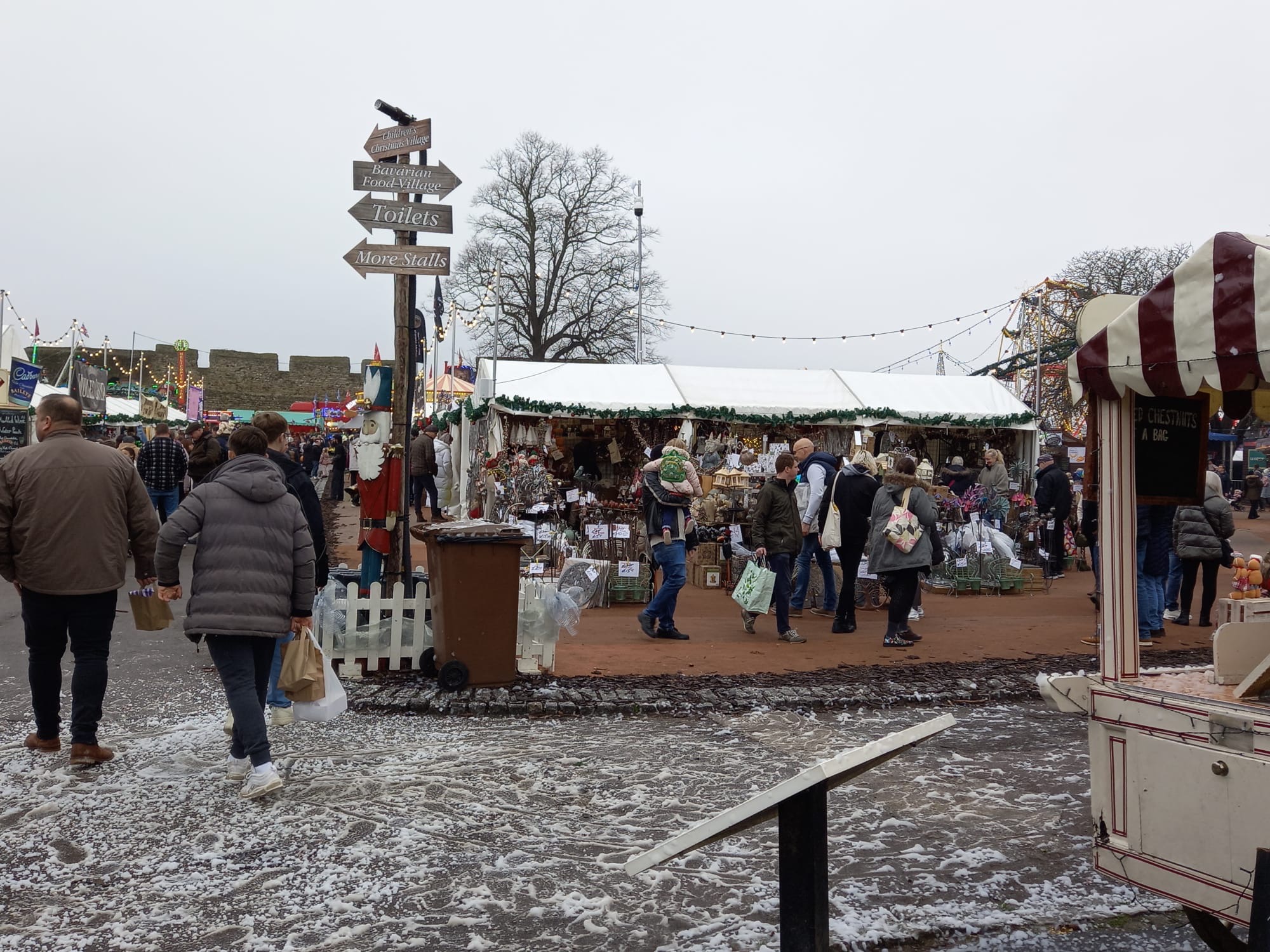
November saw a coachload of the Friends heading to Rochester for the Christmas market. The weather wasn’t particularly good but Paul, our trusty driver dropped everyone off near the market so folk were free to wander and enjoy the variety of stalls.
Some of the group enjoyed the High Street shops set out for the Dickens Christmas events whilst others enjoyed the architecture, peace and warmth of the cathedral.
It was a good day and enjoyed by all who went.
Windsor – July 2024
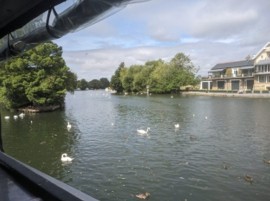
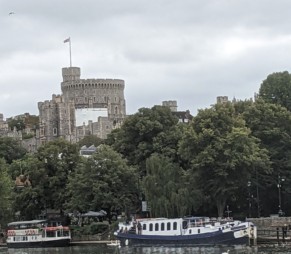
Our outing in July took us to Windsor. Here we boarded a French Brothers boat for a cruise on the River Thames and a ploughman’s lunch.
We passed through Boveney lock, and sailed as far as Bray, passing Dorney Lake and some fantastic riverside properties. The commentary was clear and informative and we all had good view.
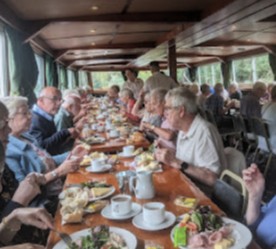
The highlight of the cruise was lunch! Described by everyone as the best ploughman’s lunch they had ever seen! It really was excellent!
The afternoon was free to explore the town or sit to watch activity on the river. It was a good day.
Suffolk Coastal Tour – April 2024
In April we hoped for some good weather for our Suffolk Coastal Tour but it was cold and very windy with the odd heavy shower. However, we were not deterred.

A fishing boat on the shingle beach, Aldeburgh. 
Ruins in Dunwich where most of the village has been reclaimed by the sea 
Houses on the sea front in Aldeburgh 
Southwold Jack, a 15 century clock jack in St Edmund’s Church Southwold 
The House in the clouds
We picked up our Blue Badge Guide and headed for Aldeburgh driving through Woodbridge en route. We dispersed to various places to find coffee and battled against strong winds off the sea. The sun did shine briefly, highlighting the colours of the Edwardian houses on the seafront.
We passed the House in the Clouds in Thorpeness. Originally intended to provide an adequate storage capacity for a basic water supply for Thorpeness village, it has been converted into a house in the trees 70 foot high. It is now a holiday let and there are 68 stairs.
Lunch was in Dunwich at the Flora cafe right on the beach which is famous for its fish and chips! The wind blowing on the beach was so strong that we were happy to get back in the coach and continue our journey along the coast to Southwold. The Blue Badge guide delighted us with stories of pirates and local people in the area which made the journey interesting and informative about places that we perhaps had visited before but knew little about.
London – Christmas 2023
An unusual start for most of us was a Sunday in London starting with a fish and chips lunch! It was delicious and set us up for the rest of the day.
Paul drove us on to St Paul’s Cathedral where we sat under the dome to take part in Choral Evensong. The singing was lovely and we were able to really feel part of the service.
Rain did not deter us as we set out on a coach tour of the city to experience Christmas and the lights.
It was very busy with sightseers and shoppers.
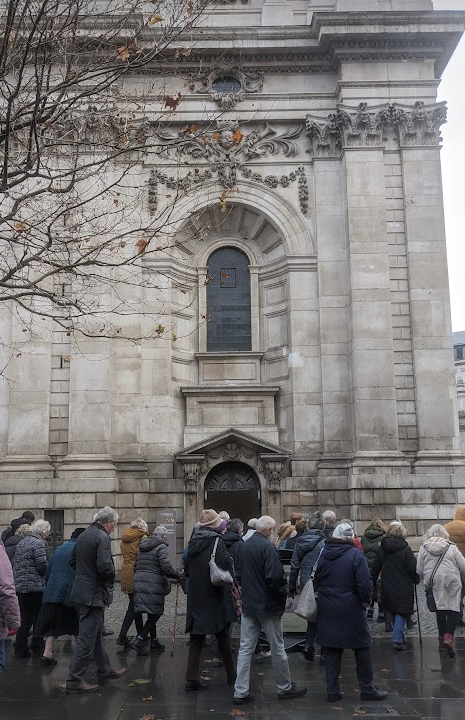
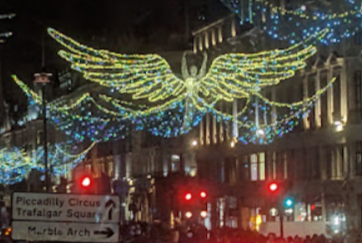

The throngs of people were even greater when we stopped at Covent Garden. It was difficult to move but created a real lead-up to Christmas.
After a comfortable journey home, 48 members had had a thoroughly enjoyable day.
Highclere Castle 2023
The connection of Highclere to Downton Abbey was an obvious draw to the numbers who booked for this outing! It didn’t disappoint!
There was free-flow in the castle but everything was well documented and there were stewards to answer questions and offer anecdotes.
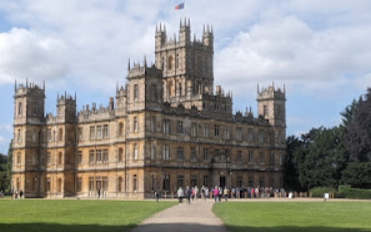
The home of Lord and Lady Caernarvon, there is also a strong Egyptian link as the 5th Earl of Caernarvon together with Howard Carter, discovered the tomb of Tutankhamun in 1922. Several of the group visited the Egypt exhibition and we all enjoyed exploring the grounds and the attractive gardens.
The 5,000-acre estate is in Highclere in Hampshire with a park designed by Capability Brown in the 18th century.
Royal Opera House Workshops – June 2023
In June, forty members of the Friends were privileged to be able to visit the workshops at the Royal Opera House in Thurrock. Here all preparations are made for the operas and ballets which take place at Covent Garden.
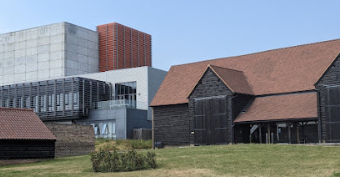
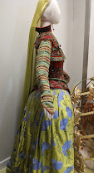
A huge warehouse stores all the costumes which have been used in productions.. We saw period costumes, those worn by famous performers, body fat suits, tutus and collections of handbags and even men’s braces . All costumes are hand made.
The workshops are immense. We saw workers welding metal to make frames for props. Then in the next process small wooden slats are attached to the frame. After a foam spray, the structure is painted. This was to be a 15 ft high tree to be used in a production of Wagners “ The Ring Cycle”
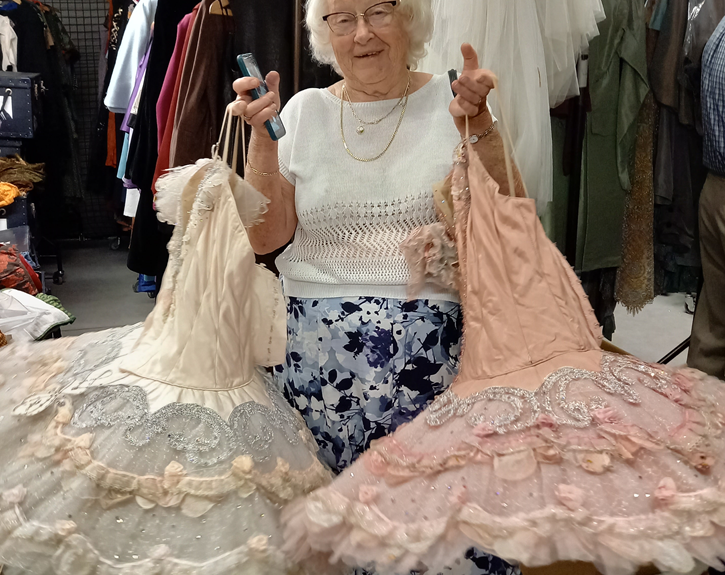
It was a most interesting experience and gave greater understanding of the behind scenes work necessary for any production.
Stamford – July 2022
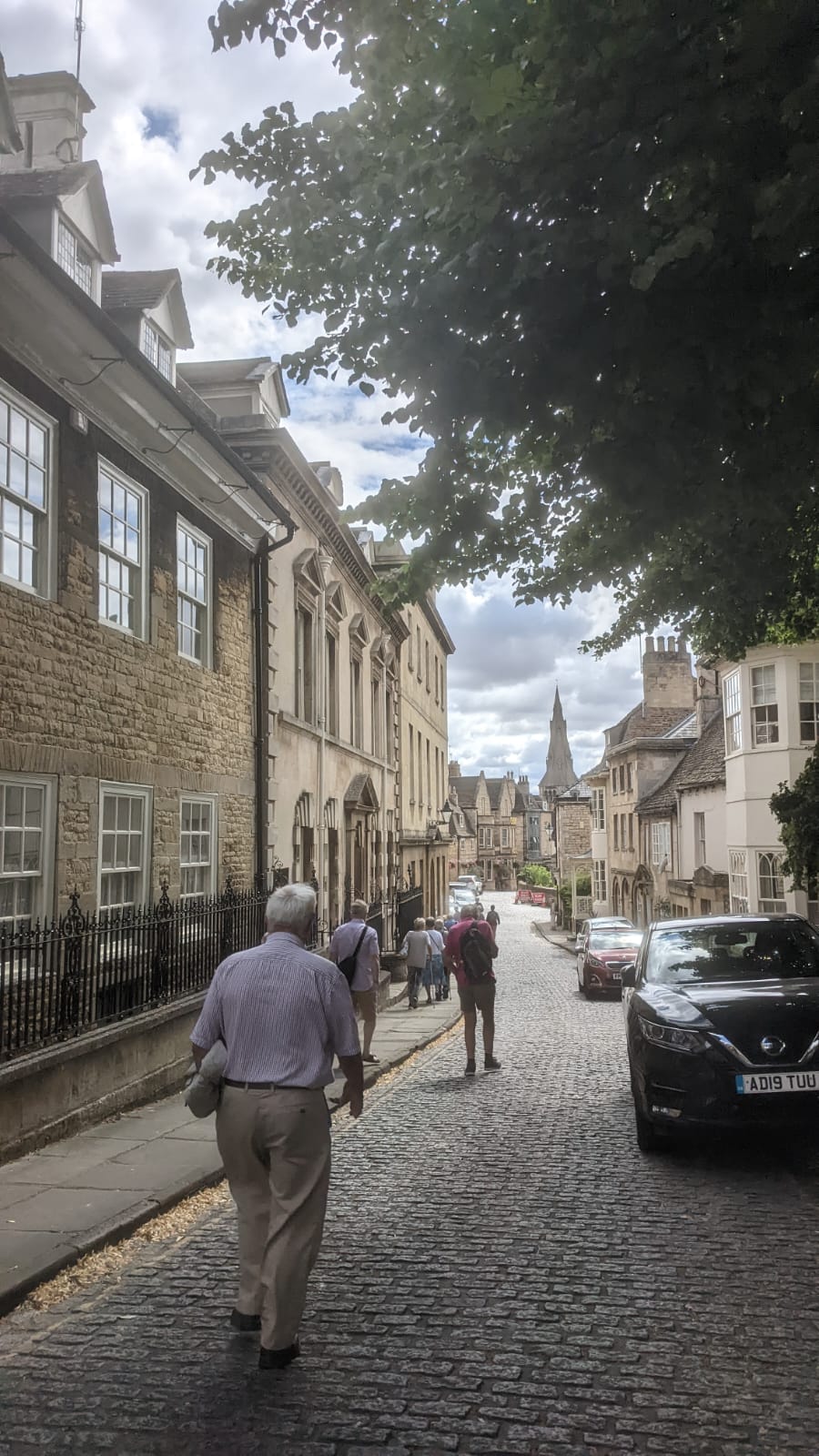
On 25 July 2022 we travelled to Stamford in Lincolnshire
Described as “the finest stone town in England” it was declared a conservation area in 1967 and has over 600 listed buildings including five medieval churches.
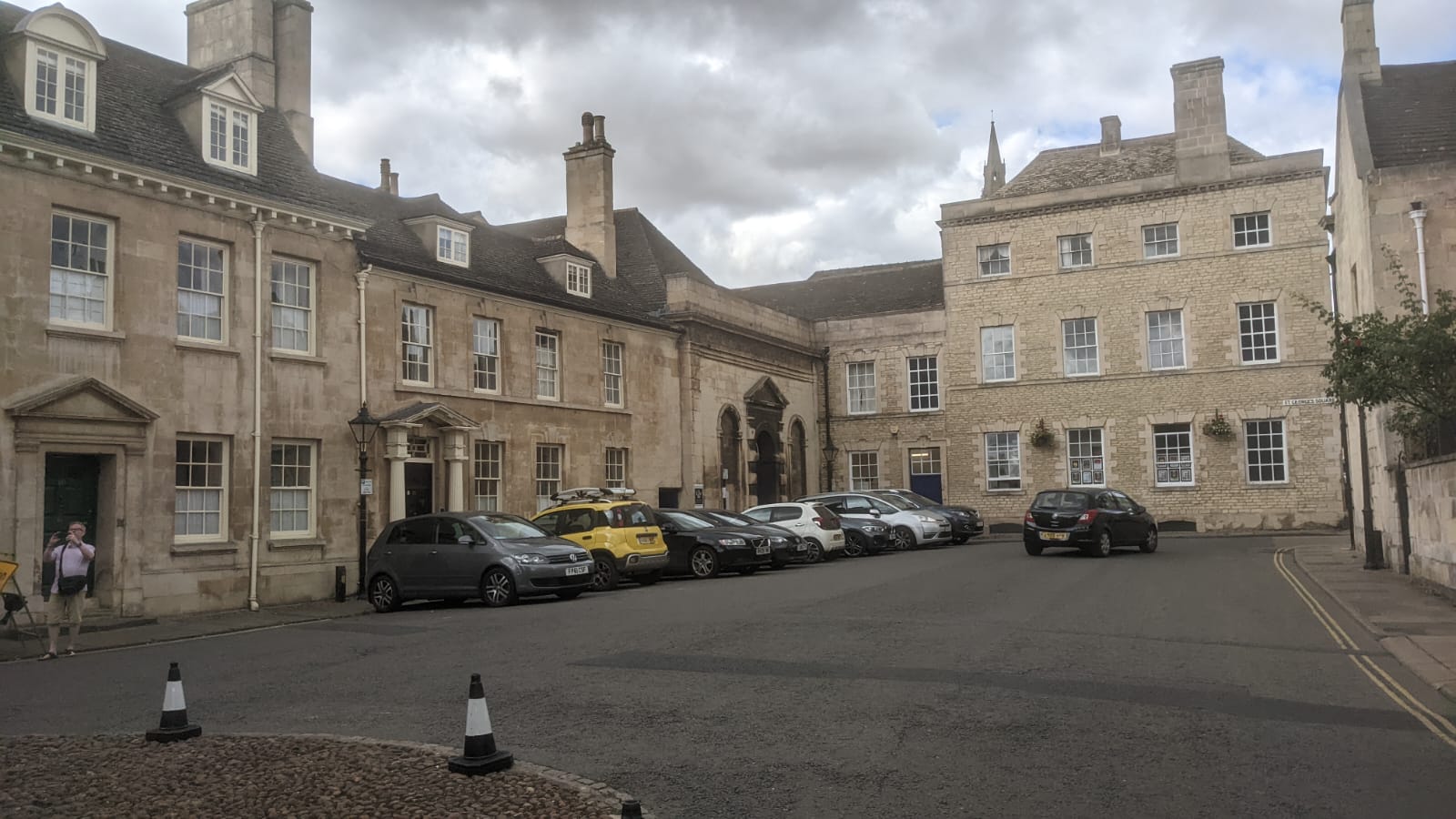
On arrival we were met by our guide and then had time for coffee before starting our walking tour of the town. Noted for its Georgian buildings , it was interesting to hear of those who had lived there and influenced the development of the town. Often used in the filming of period dramas, Middlemarch, Pride and Prejudice were shot here.
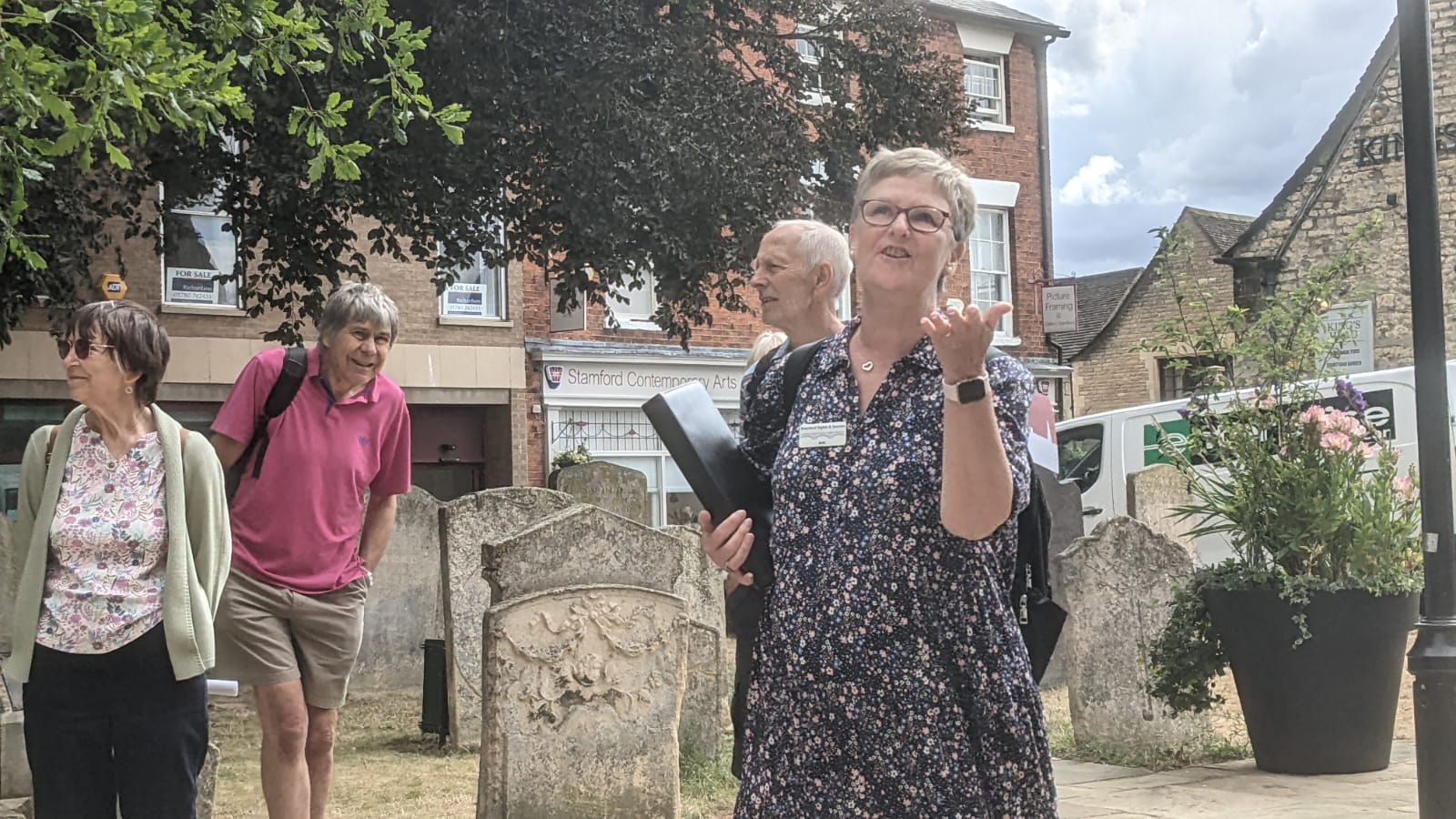
There was plenty of time for lunch and then to discover places we had seen on the walk and it was a very successful journey out.
Ickworth – May 2022
What a day! It started raining as we neared Bury St Edmunds and didn’t stop all day! However this did not spoil the enjoyment of members who visited the cafe for coffee and lunch, visited the house and walked the gardens and the grounds.
Ickworth is a National Trust property. Its origins can be traced back to the Domesday book when it was merely one of hundreds of assets belonging to the Abbey of Bury St Edmunds. Its association with the Hervey family began three centuries later in 1432, when Thomas Hervey acquired the land by marriage. Through success and scandal, Ickworth was the family’s home for the next 500 years.
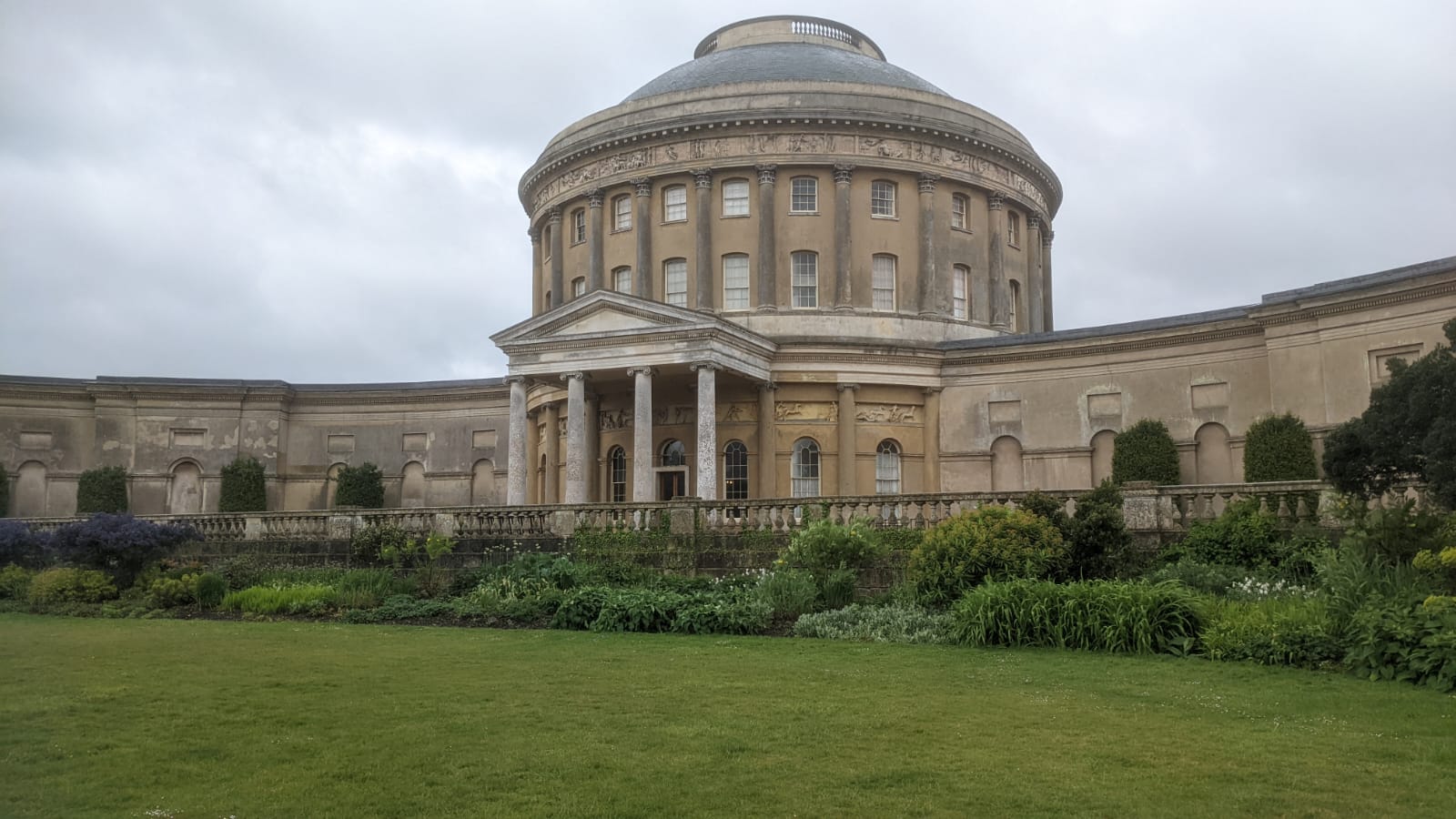
Ickworth was designed to impress. It was built as an 18th century palace to showcase the many treasures and art collected by the Earl Bishop who despite being a third son, inherited the Estate in 1779. He was the 4th Earl of Bristol Started in 1795, the building was still just a shell when he died in 1803 and his son was left to complete his vision. The house has an amazing Rotunda. Nothing like it had ever been seen in this country before and even now it’s unique. The House took 47 years to complete. In 1829, the family moved into the East Wing of their (nearly finished) palatial new home. Surrounded by beauty, both inside and outside, the Herveys enjoyed Ickworth until well into the 20th century.
The Earl Bishop had spent his life travelling in Europe and secured a vast collection of art and treasures. There is a wonderful collection of pictures…Titian, Reynolds and Gainsborough being amongst the artists and there are some fine sculptures. The silver room houses the largest collection of silver within the National Trust and has some wonderful examples of how the wealthy wined and dined.
The Hervey’s tenure at Ickworth came to an end in 1956 when the 4th Marquess presented the house and estate to the Treasury in lieu of death duties. The Treasury passed Ickworth to the National Trust.
The Italianate Gardens and Stumpery were explored in the rain and we only wished we had seen them in sunshine!
Sutton Hoo – October 2021
The first visit since March 2020 took place on Wednesday 20 October when a group of the Friends travelled with Flagfinders coaches and our special driver, Paul, to Sutton Hoo near Woodbridge.
Masks were worn on the coach and single travellers allocated two seats so distancing was observed.
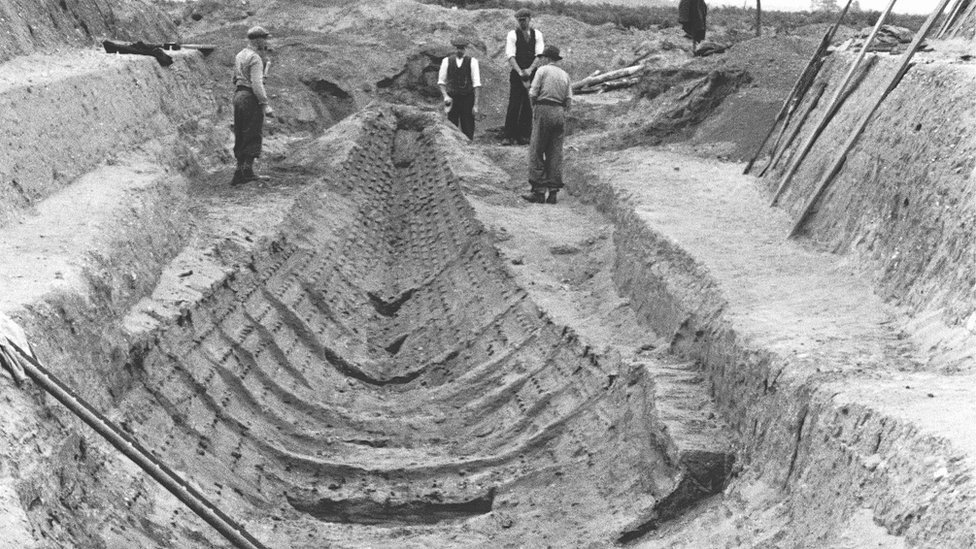
Sutton Hoo is home to one of the greatest archaeological discoveries of all time.

In 1939, burial mounds in the grounds of a property owned by Mrs Pretty were excavated by Basil Brown, her gardener and amazingly the great ship burial was discovered. Other mounds had been previously dug and looted, but this was the most amazing discovery of the century. The mound he excavated was a royal burial ground, the final resting place of an Anglo Saxon king with his treasured possessions, Because of the imminence of World War II, Mrs Pretty made the generous decision to donate all the finds to the British Museum.
The site is cared for by the National Trust and recently they have made great developments. A 17 metre tall viewing tower has been erected opposite to the burial mounds and from here it is possible to get a real bird’s eye picture of the site and the proximity to the River Deben from where the ship was dragged to its final resting place.


In the courtyard, a full size sculpture of the ship has been erected which really gives an understanding of the size and the importance of the finds. The High Hall exhibition contains replicas of many of the treasures, including the iconic helmet, the gold belt buckle and a patterned sword. In Mrs Pretty’s home, Tranmer House, there is an exhibition to show various digs and excavations that have taken place at Sutton Hoo.
We were blessed with a mild sunny day and the opportunity to catch up with people who we had not met each other for over a year.
Saatchi Gallery for the exhibition – Tutankhamun Treasures of the Golden Pharoah
On March 11 2020, a group of 43 members of the Friends embarked on a journey to London to visit the Saatchi Gallery and see the much praised exhibition, “Tutankhamun, Treasures of the Golden Pharoah”

It was a bright sunny day and we were able to enjoy and appreciate the London buildings as we moved slowly in the traffic. The streets were however remarkably empty of people with the travel restrictions imposed by the Coronavirus situation already affecting tourism.
Staged to celebrate almost 100 years of the tomb discovery (1922), some of the artefacts on display had not been out of Egypt before. Everything was well documented and because many exhibits were in central display cabinets, it was possible to walk around them and get quite close. Information was given above the displays and in several places short videos enhanced the understanding of the artefacts.
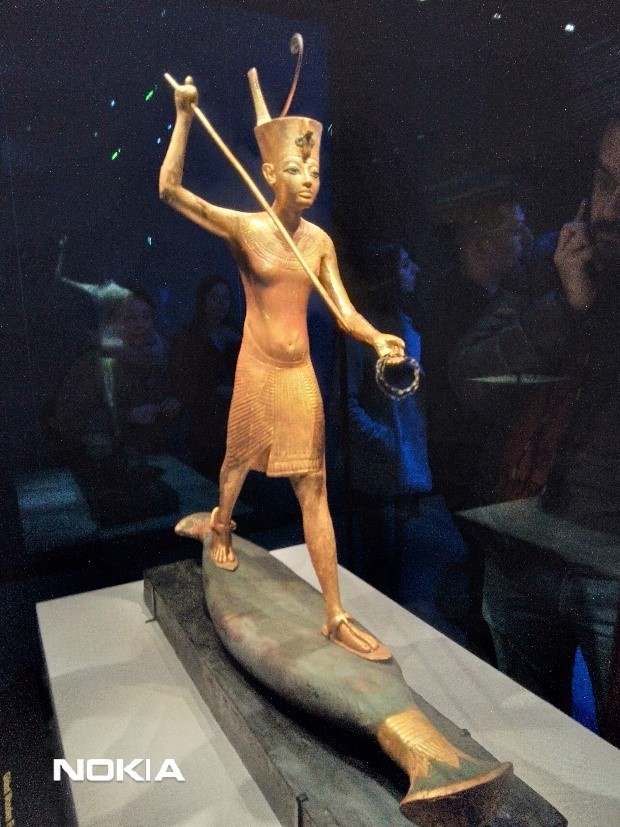
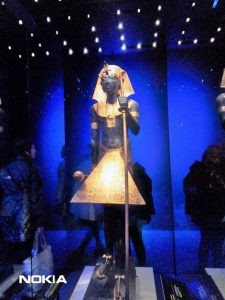
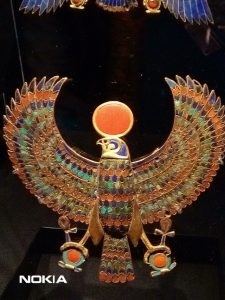
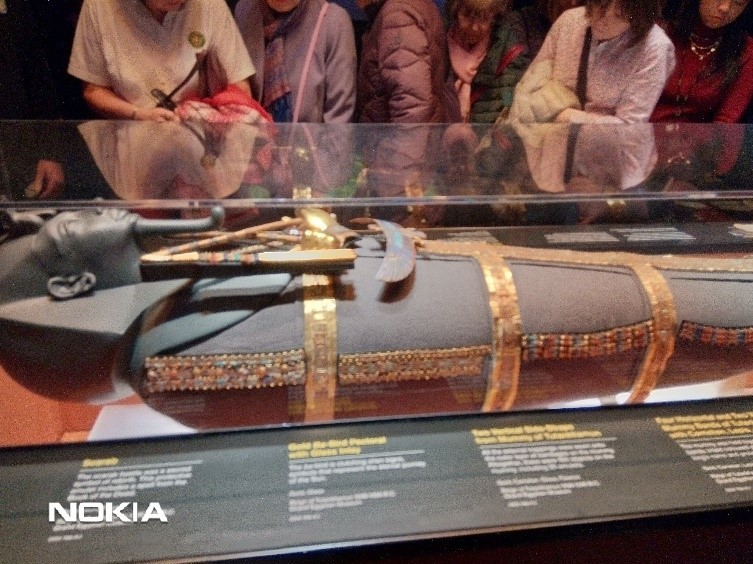
When the tomb was opened and Howard Carter saw the extent of the contents he must have been totally overwhelmed. Over 5,000 beautiful, richly coloured and decorated artefacts had been buried with the 19 year old king when he died to accompany him on his journey to the afterlife. These included a solid gold coffin, face mask, thrones, archery bows, trumpets, a lotus chalice, food, wine, sandals, and fresh linen underwear. The exhibition told the story of this journey.

Servants were in attendance and there were large containers which held food for the journey. There were bows and arrows, so he was prepared for attack. Many small icons were buried with him and the most beautiful gold and colourful jewellery. Chests were decorated with hieroglyphs and one of the final exhibits was the sarcophagus.
It was an exhibition which showed a wealth of opulence and beauty. It was difficult to comprehend that these artefacts were over 4.000 years old and yet the craftsmanship was intricate and exceptional. It was a truly memorable visit.